

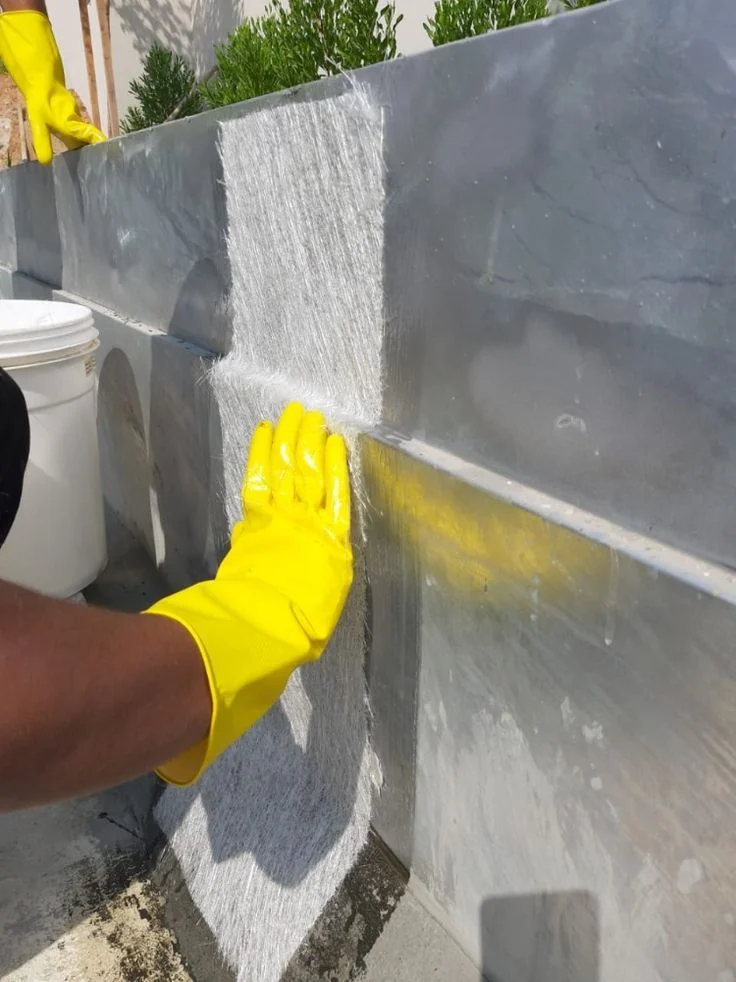




GRP lining is a fibreglass laminate applied directly onto concrete, blockwork or steel to make a seamless, waterproof and chemical-resistant surface. In the UAE it is commonly used for water tanks, swimming pools, water features, planters, roofs and wet areas.
What GRP lining is
A GRP lining is built up on site: the surface is prepared, primed, then layers of glass fibre mat are laid in resin and finished with a topcoat or gelcoat. The result is a continuous lining with no joints for water to pass through.
Where GRP lining is used
- Concrete water tanks (ground and roof tanks)
- Swimming pools, balancing tanks and water features
- Planter boxes and landscape structures
- Roofs, gutters and wet areas
- Drainage channels, manholes and chemical areas
Why GRP lining
- Seamless and waterproof: one continuous laminate, bonded to the substrate.
- Durable: resistant to water, many chemicals and UV with the right topcoat.
- Repairable: damaged areas can be cut back and re-laminated.
- Hygienic: smooth, easy-to-clean surface.
The lining process
- Surface inspection and preparation (cleaning, grinding, repairs)
- Primer
- Glass fibre mat laminated in resin to the specified thickness
- Topcoat / gelcoat finish
- Curing, inspection and, for tanks, water testing before handover
Questions & answers
How long does a GRP lining last?+
A well-applied GRP lining on a sound, properly prepared surface gives long service; life depends on the substrate, the specification and how the tank or area is used.
Can GRP lining be applied to an old tank?+
Yes. Old concrete tanks are commonly relined with GRP after surface repairs, which is often quicker than rebuilding the tank.
Is GRP lining suitable for drinking water tanks?+
Yes, when food-grade / potable-water approved resins and topcoats are used as required by the project specification and authority.