




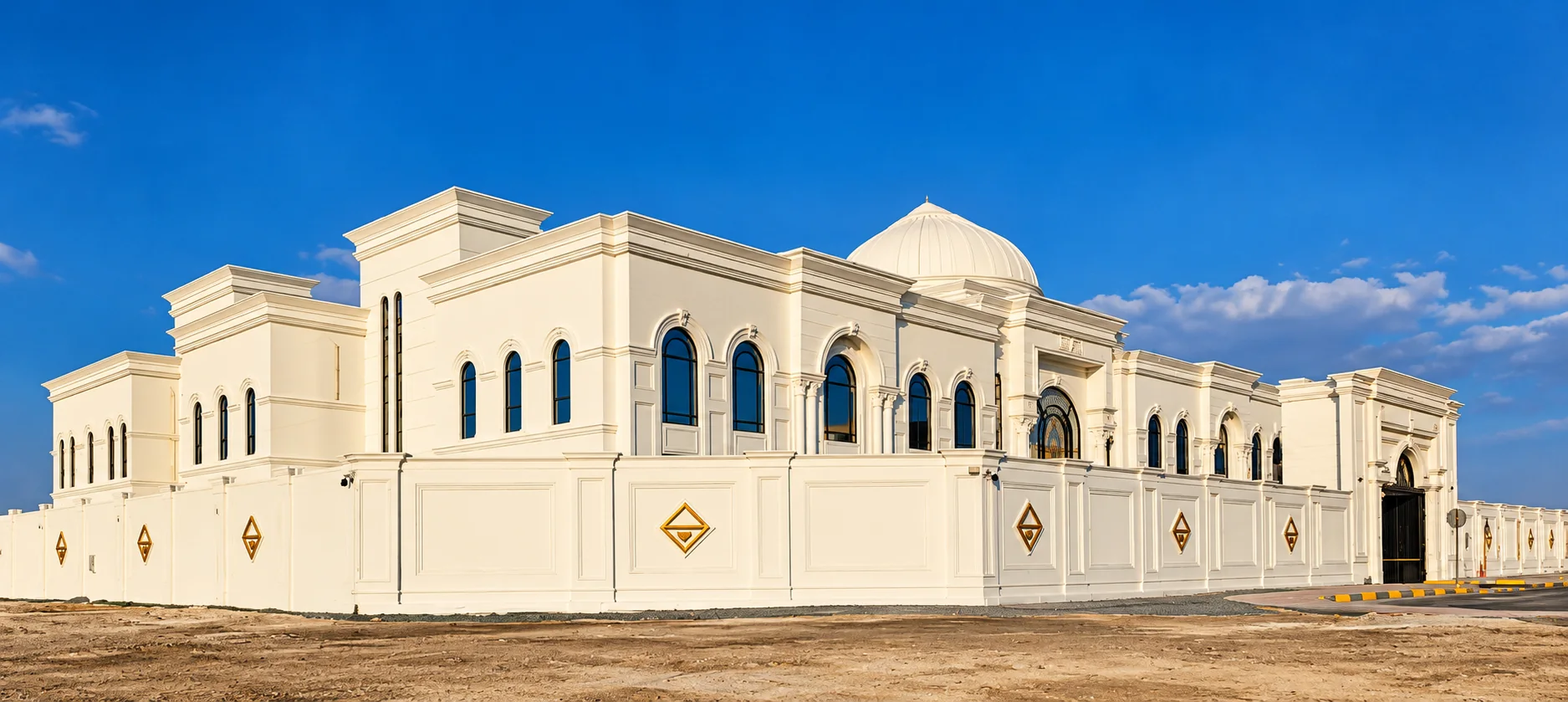
Technical searches like "spray vs premix", "GRC panel thickness" and "GRC fixing details" come mostly from engineers and consultants. Here is how a GRC element goes from drawing to building.
1. Shop drawings
The architectural design is divided into panels, with every joint, embed, bracket and fixing detailed before production.
2. Mould making
Moulds are made in timber, GRP, rubber or steel depending on the profile and the number of repeats.
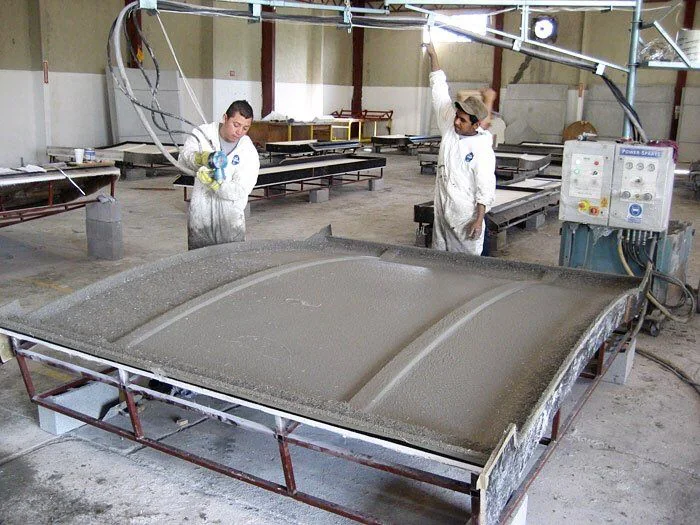
3. Spray or premix casting
- Spray: a slurry and chopped AR glass fibre are sprayed in layers onto the mould, then compacted. Best for large thin panels.
- Premix: fibres are mixed into the concrete, then cast or vibrated. Best for small, thick or highly detailed pieces.
4. Curing and demoulding
Elements are cured under controlled conditions, then demoulded, checked and finished.
5. Steel frames and fixings
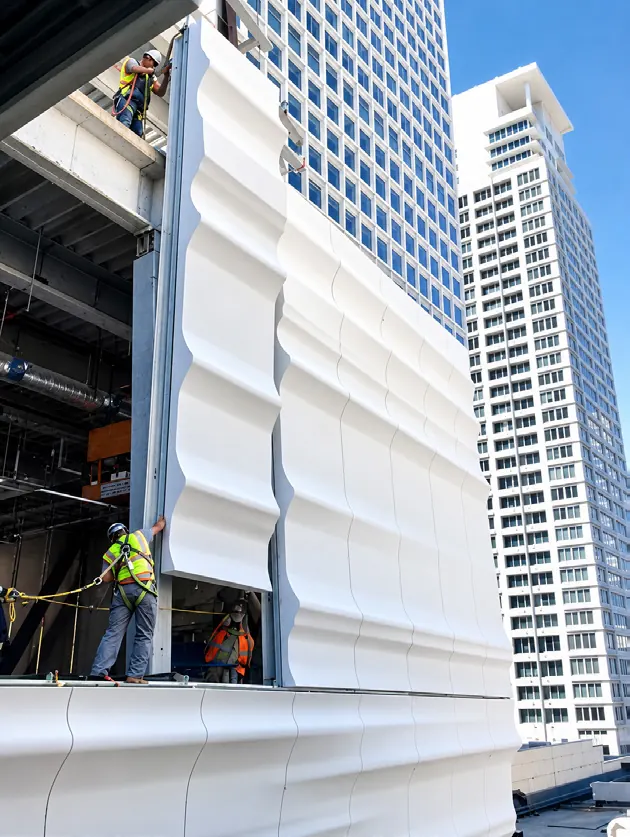
Large panels are usually fixed to a lightweight steel stud frame with flexible anchors, which allow for movement. Frames and brackets are then fixed back to the structure.
6. Installation and joints
Panels are lifted, aligned and fixed to the method statement, then joints are sealed with backing rod and sealant.
Questions & answers
How thick is a GRC panel?+
GRC skins are commonly around 10–15 mm, with ribs, returns or steel frames providing stiffness. Final thickness is set by the design and specification.
What standard covers GRC?+
GRC is commonly specified and tested to BS EN 1169 (factory production control) and BS EN 1170 (test methods).
How heavy is GRC?+
GRC has a density similar to concrete, but because it is cast so thin, the weight per square metre is a fraction of solid precast.